

By inserting a text box in Excel, you can add text to it and move it anywhere in the worksheet. You can also customize it by changing the font style, outline, color, etc.
In this tutorial, you are going to learn all the methods to insert it and the properties and options that come with it. Let’s get started.
Steps to Insert the Text Box in Excel
To add a text box to your worksheet, follow the below steps:
- First, go to the Insert tab, click on “Text”, and then select “Text Box” from the ribbon.

- After that, in the Excel sheet, place the cursor at the point where you want to add the text box, and drag it down while holding the left mouse button.

- Now, you will see the cursor inside the text box, ready for you to write in it.
- Just start typing and enter the text that you want to insert.

There’s a keyboard shortcut that you can use to insert a text box in Excel: Alt ⇢ N ⇢ X.
Adding a Textbox from Shapes
- First, go to the Insert tab, click on “Illustrations”, and then select “Shapes”.

- Now, select the text box from the list of shapes (under Basic Shapes).

- After that, click on the place in the worksheet where you want to insert it.
- In the end, add the text into the textbox as you want.

Formatting the Text Box
After adding the text box, you can change its formatting by changing its shape, font, font style, size, color, and so on. When you select the text box, you will get a new tab on the ribbon called “Shape Format”.
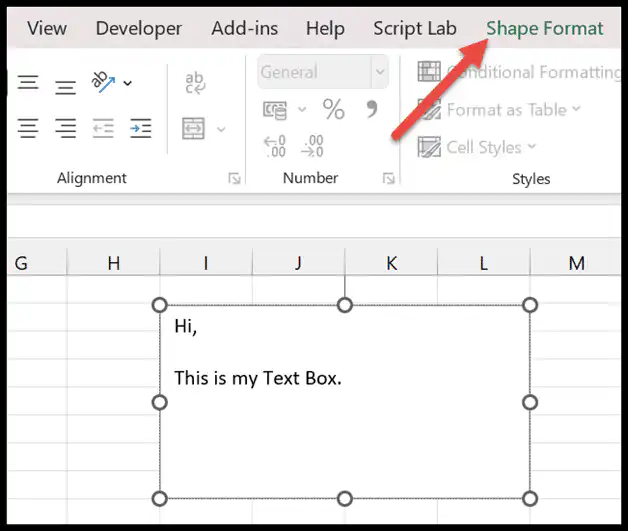
Changing Shapes and Editing Points
There are a variety of shapes available in the Insert Shapes drop-down that you can add text to.
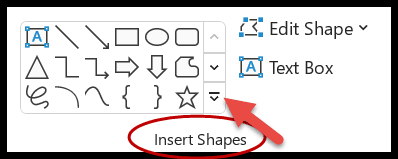
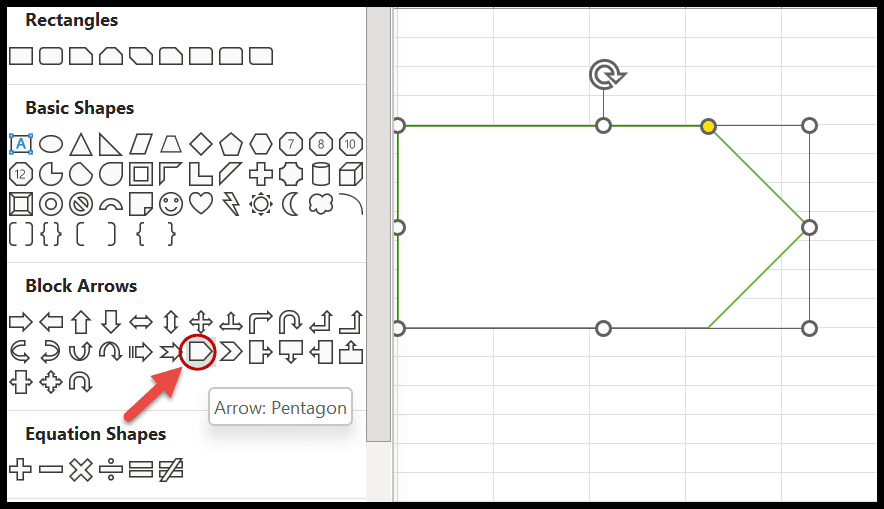
- First of all, select the shape in which you want to add and highlight your text.
- Then, click on the place where you want to add it.
- After that, hold and drag the cursor to draw the shape on the worksheet.
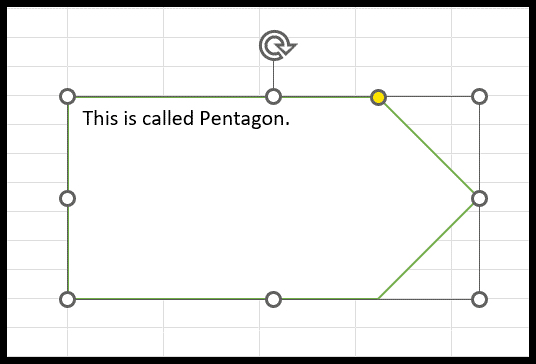
- Now, you can enter the text of your choice in it by double-clicking.
Edit Shape – If you want to change the shape into another one, click on the Edit Shape drop-down arrow and select the alternative shape from the “Change Shape” option.
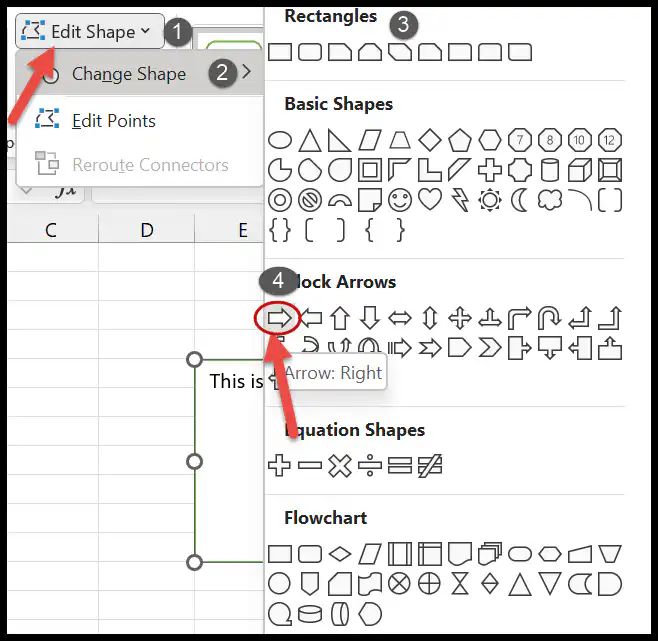
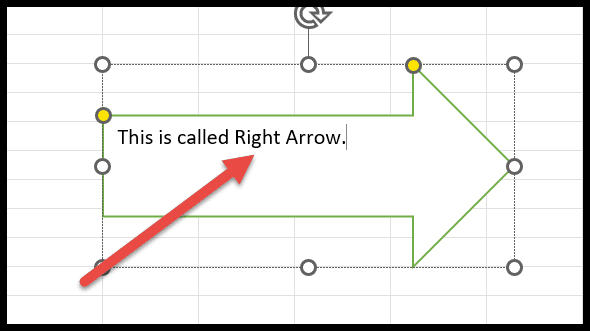
Once you click on the final shape, you will get the previous shape converted into the new one.
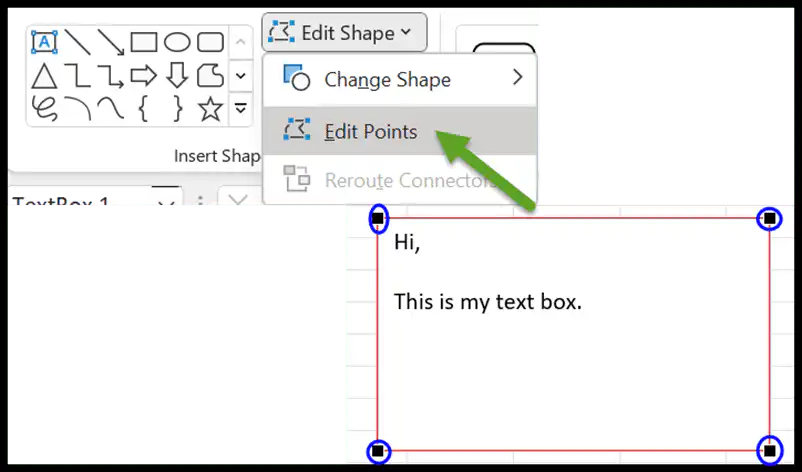
Edit Points – It helps you convert the text box into a free-form shape. When you click on this option, small black points appear on the outline of the text box. After that, drag any point to extend the shape in any direction.
Shape Styles
In the “Shape Styles” group, first, you can select a theme style for the shape.
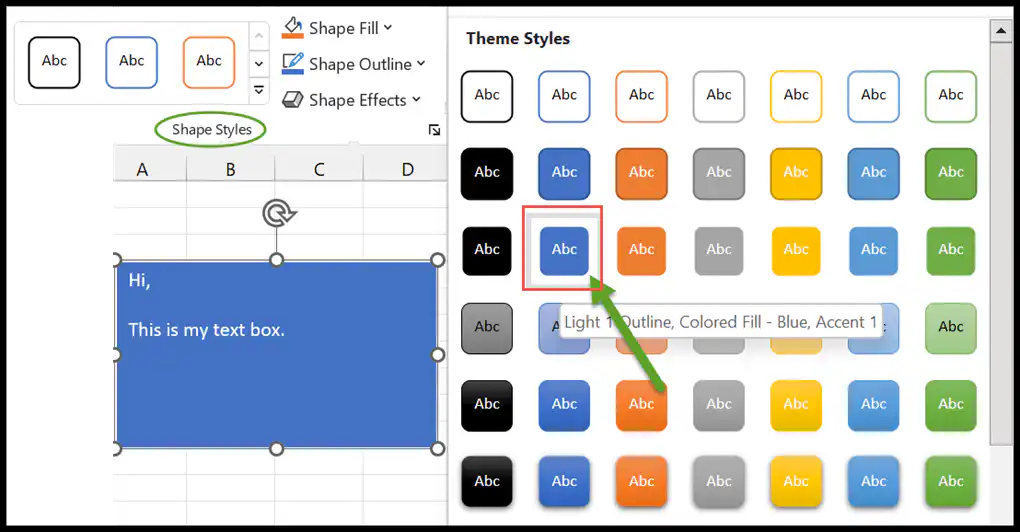
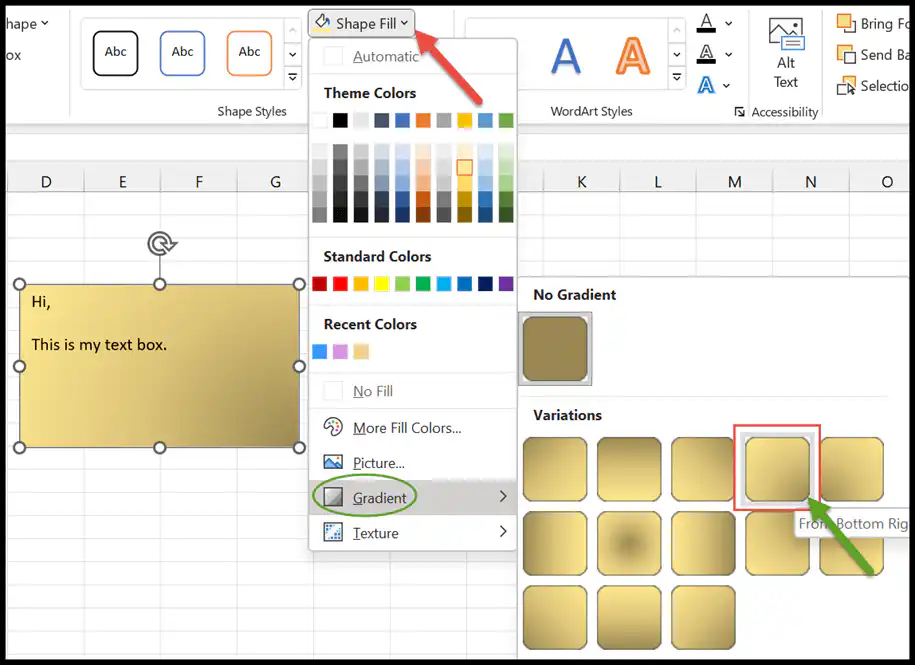
You can also choose a color, gradient, picture or texture through “Shape Fill”.
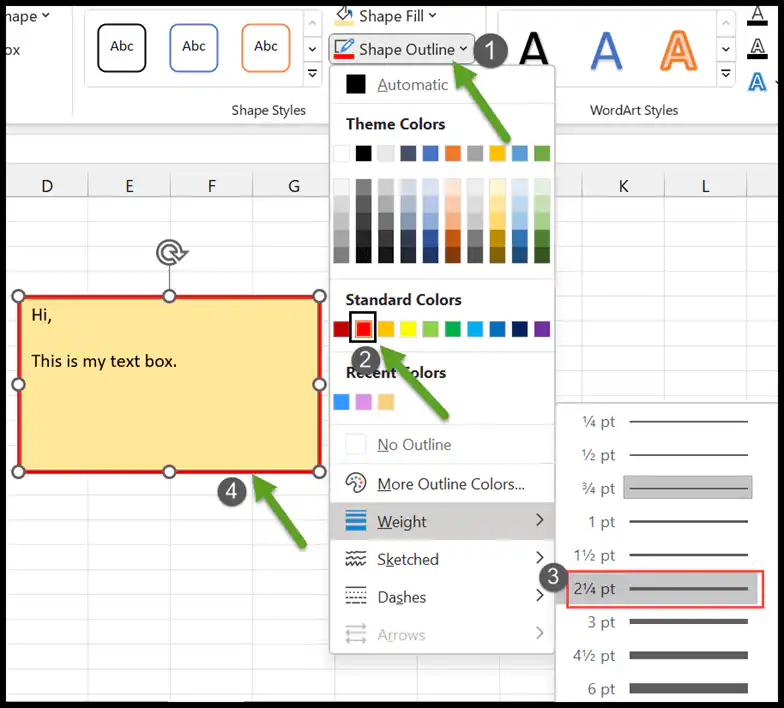
Shape Outline allows you to change the outline color of the shape, and if you want to change the width and line style of the outline, click on the Weight and Dashes options.
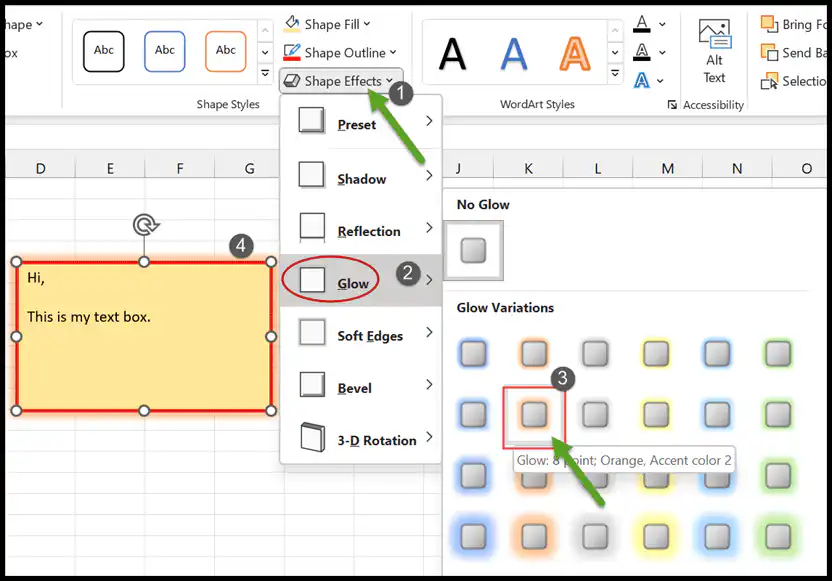
With “Shape Effects”, you can apply some visual effects like shadow, reflection, and so on to give a different look to your text.
Remove the Border
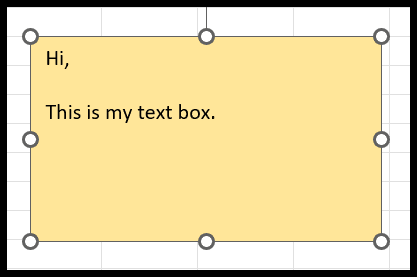
For this, you have to go to the “Shape Outline” drop-down in the Shape Styles group. Then, select the “No Outline” option from it.
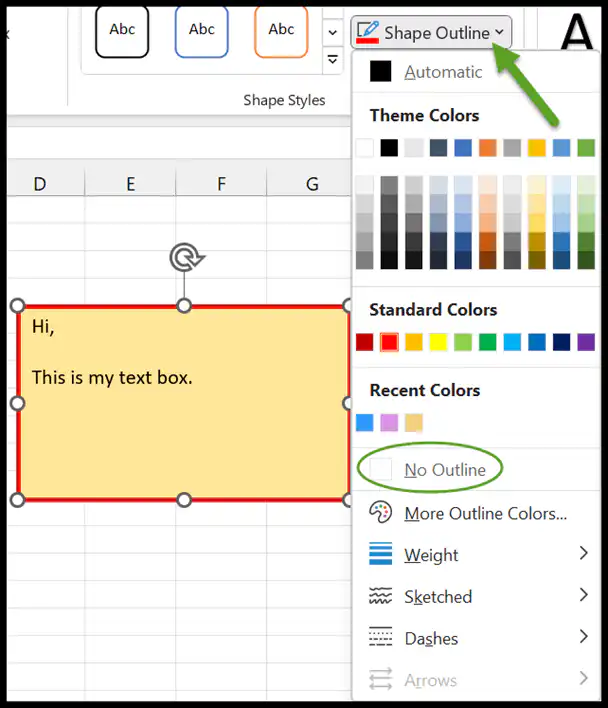
Once you click on this, it will remove the border of the selected shape, and it looks like the below.
Font Size, Style, and Color
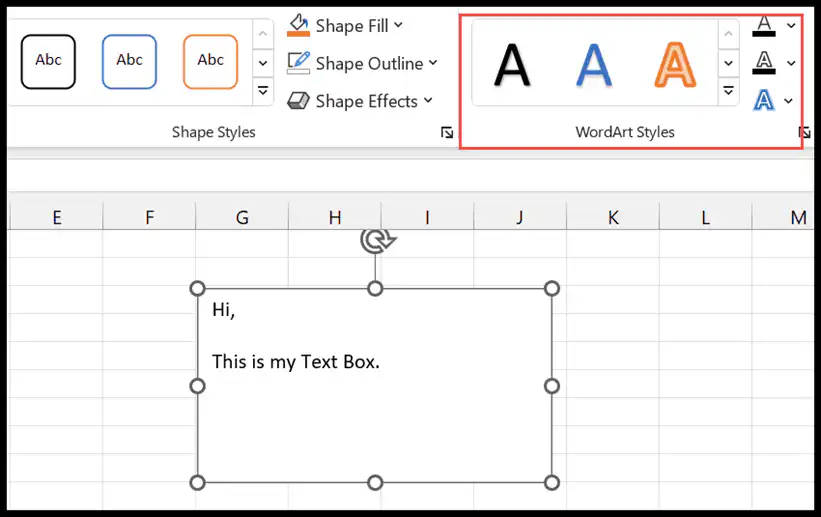
Once you select the text box, you can add text to it just by double-clicking inside it. To change the font, font size, or bold and italic, select the text and use the Font group on the Home tab. Right next to the Shape Styles group, the WordArt Styles group has more text formats.
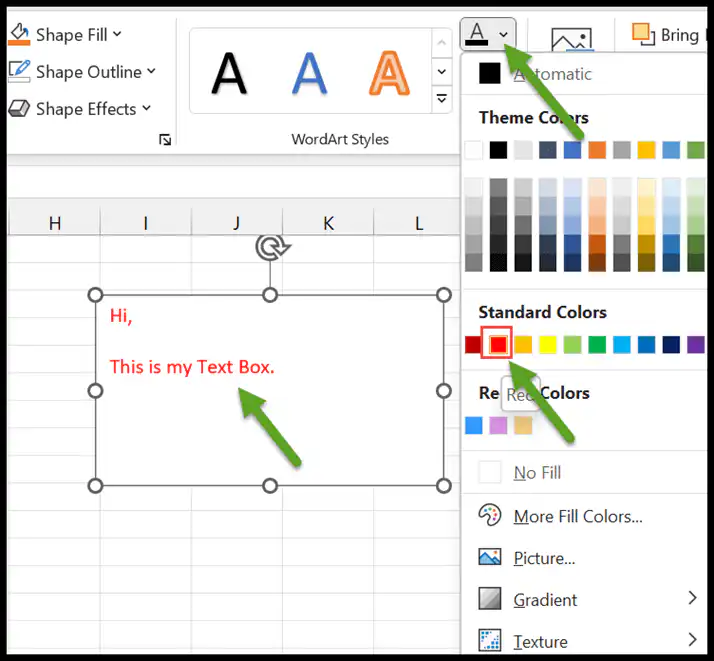
Here, with the “Text Fill” option, you can change the color of the selected text.
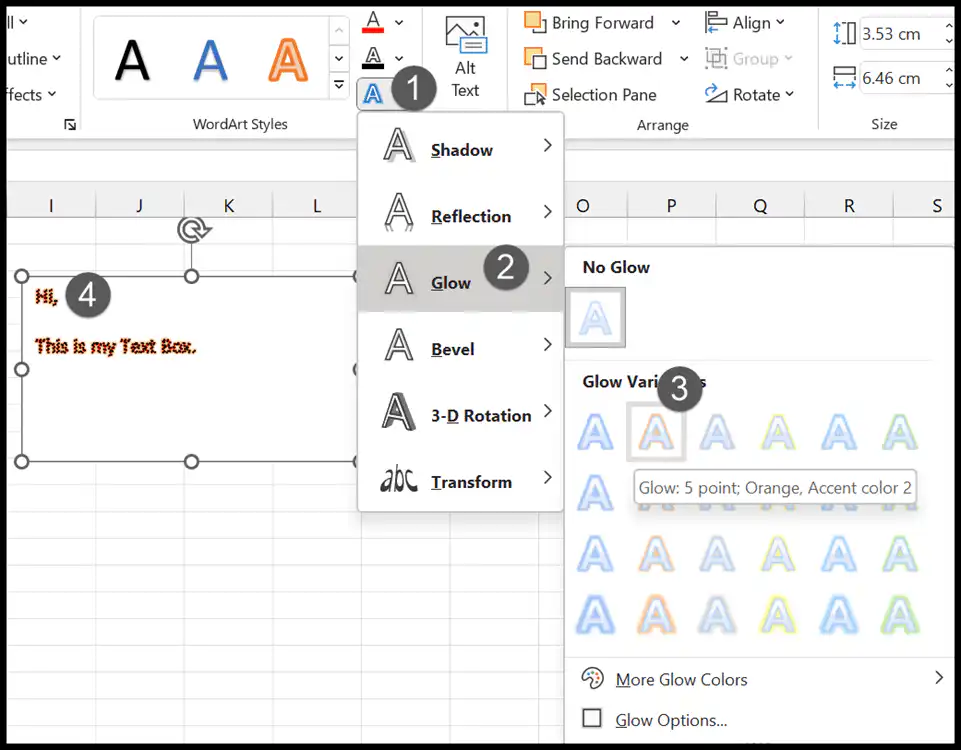
Text Outline and Text Effects help you modify the text by adding borders and effects to it.
Rotating the Text Box
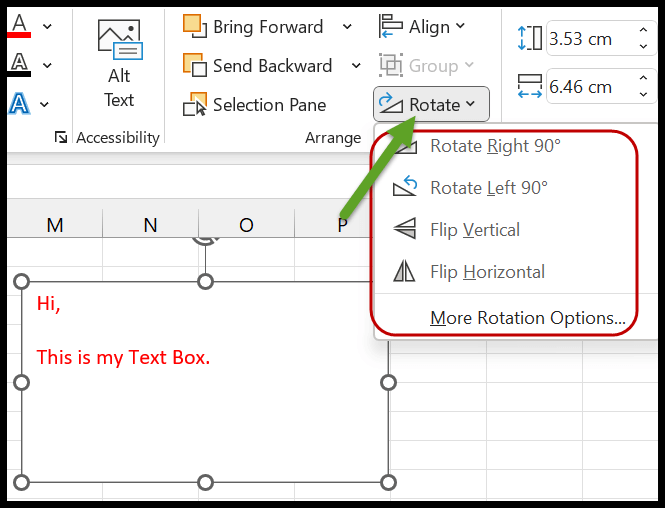
The Rotate option is in the “Arrange” group. Just click on the drop-down, and you will get the options to rotate the text box left or right by 90 degrees. Also, you can flip it horizontally or vertically, or drag the round rotation handle on top of the text box to turn it to any angle.
Resizing the Text Box
It’s very easy to change the height and width of the text box. You can do it in two different ways:
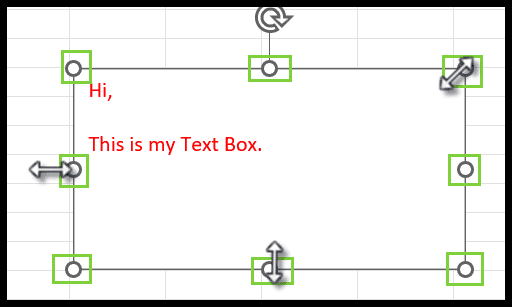
- First, once you select the text box, you will see small circles (sizing handles) around it, and by dragging these circles, you can adjust its size as you want.
- The second method is to use the Size group, which is at the right end of the Shape Format tab.

Link a Text Box to a Cell
A text box can show the value of a cell and update when the cell changes, which is great for dashboards.
- First of all, click the border of the text box to select it (not the text inside it).
- After that, click in the formula bar and type an equal sign followed by the cell address, like =B2.
- In the end, press Enter. The text box now shows the value of cell B2.
You can link a text box only to one cell, not to a formula. If you need a calculation, put the formula in a cell and link the text box to that cell.
Text Box Options in the Format Shape Pane
Right-click the text box and select Format Shape. Under Shape Options ➜ Size & Properties, you can choose whether the box moves and resizes with the cells and whether it prints. Under Text Options ➜ Text Box, you can set the vertical alignment, the text direction, the margins inside the box, “Resize shape to fit text” and “Wrap text in shape”.
Insert a Text Box with VBA
You can also add a text box with code, using the AddTextbox method. The position and size are in points (Left, Top, Width, Height):
Sub insert_text_box()
    Dim tb As Shape
    Set tb = ActiveSheet.Shapes.AddTextbox( _
        msoTextOrientationHorizontal, 100, 50, 200, 60)
    tb.TextFrame2.TextRange.Text = "Sales Report"
    tb.TextFrame2.TextRange.Font.Size = 14
End Sub
Frequently Asked Questions
How do I delete a text box?
Click the border of the text box so the whole box is selected (not the text inside it), and press Delete. To delete all the text boxes and shapes on a sheet, press F5, click Special, choose Objects, and press Delete.
Why does my text box not print?
The “Print object” option may be turned off. Right-click the text box, choose Format Shape ➜ Size & Properties ➜ Properties, and tick “Print object”.
Can I use a text box in a chart?
Yes. Select the chart first and then insert the text box. It becomes part of the chart, so it moves and resizes with it.

Written by
Puneet Gogia
Microsoft MVP — Excel · Founder, Excel Champs
Twelve years of teaching Excel, and a decade before that using it as a data analyst. Every tutorial here is written from a file I actually built.