

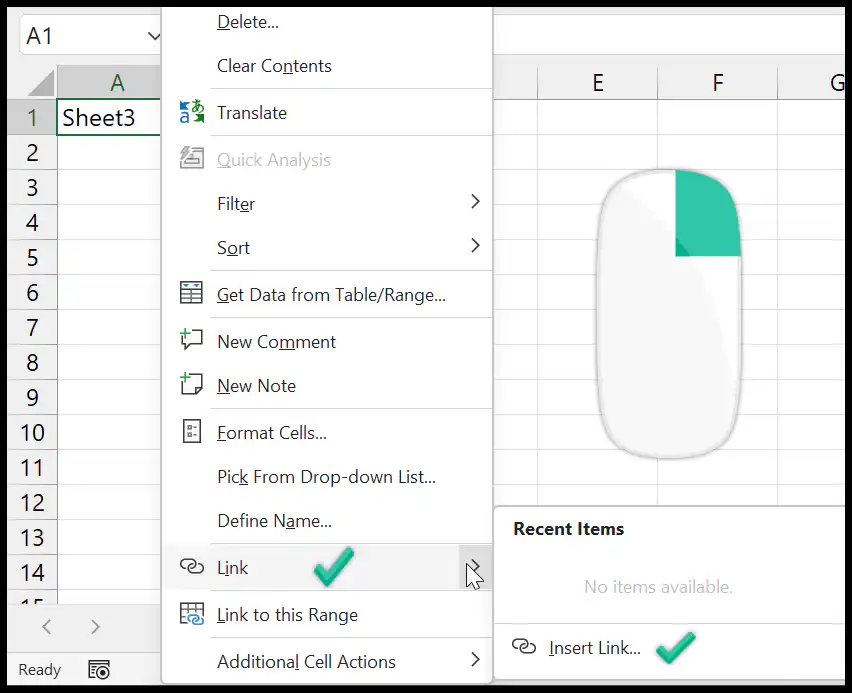
Select the cell, press Ctrl + K (or right-click the cell and choose Link), click Place in This Document, pick the sheet, type the cell to land on, such as A1, and click OK. Clicking the cell now jumps to that sheet.
To build the link with a formula, use =HYPERLINK("#Sheet2!A1","Go to Sheet2"). The # tells Excel the target is inside the current workbook; leave it out and Excel looks for a file of that name instead. If the sheet name has spaces, wrap it in single quotes: =HYPERLINK("#'Sales Data'!A1","Sales Data").
If you want the other sheet’s value rather than a clickable link, type = in the cell, click the other sheet’s tab, click the source cell and press Enter. Excel writes =Sheet2!A1, and the cell updates whenever the source changes.
Hyperlinks store the sheet name as text, so renaming the target sheet breaks them with a “Reference isn’t valid” message. To make a link survive a rename, name the target cell under Formulas → Define Name and link to that name instead: it appears under Defined Names in the Place in This Document list, or use =HYPERLINK("#SalesStart","Sales").
It’s fantastic to create a hyperlink to another worksheet from a worksheet, making it easy to navigate through the workbook. In this tutorial, we will learn two simple and quick methods to create a hyperlink to a sheet.
Use the Link Option from the Menu
- First, enter a value in a cell, right-click on it to open the context menu, and then click on the Link > Insert Link.
- Now in the “Insert Hyperlink” dialog box, click on the “Place in this Document” tab. And then click on the name of the sheet, “Sheet2”.
- Here you can also enter the cell address of the cell in the sheet to which you want to create a link. And you can also change the text in the cell from “Text to display”.
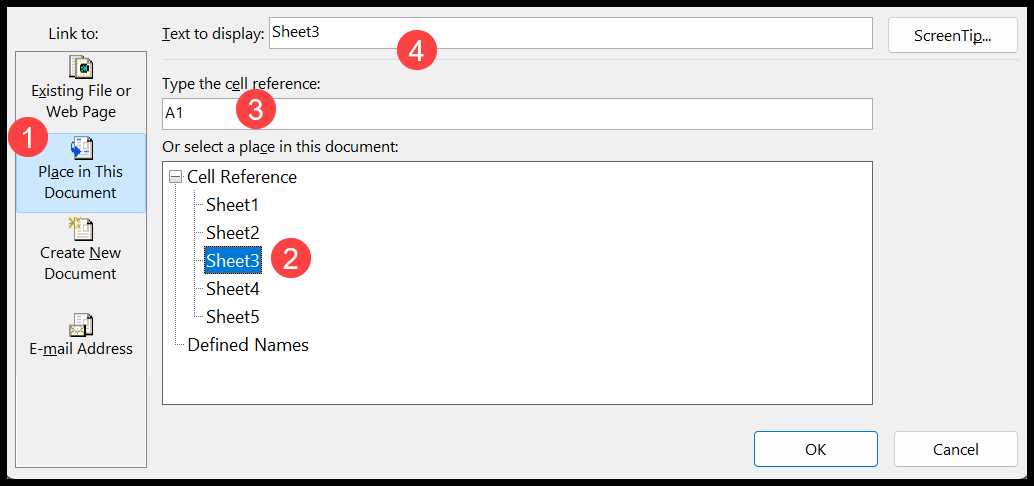
- In the end, click OK to create the link to the sheet you have specified.
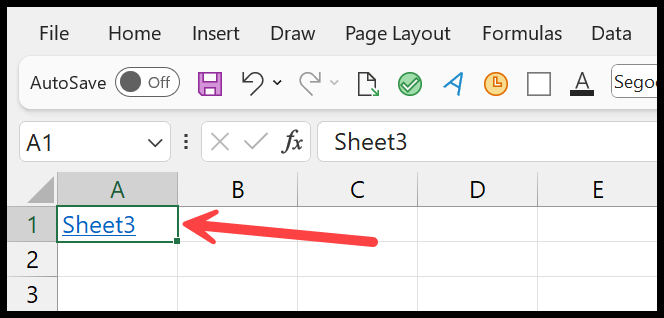
And once you click OK, it creates a hyperlink using the text you have in the cell. And when you click on the link, it takes you to the sheet and cell you selected.
Instead of right-clicking, you can select the cell and press the Ctrl + K keyboard shortcut to open the same “Insert Hyperlink” dialog box. It’s a quicker way to reach the “Place in This Document” tab.
Use Hyperlink Function to Create a Link to Another Sheet
- Enter the Hyperlink function in a cell. This function has two arguments that you need to specify.
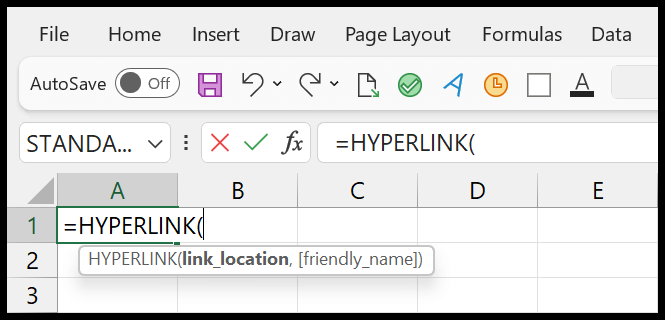
- In the first argument, you need to enter the sheet and cell address to which you want to create a link.
- You can also use the mouse to go to the cell in the sheet to automatically insert the address and enter a “#” before that address.
- And after that, wrap the address with double quotation marks.
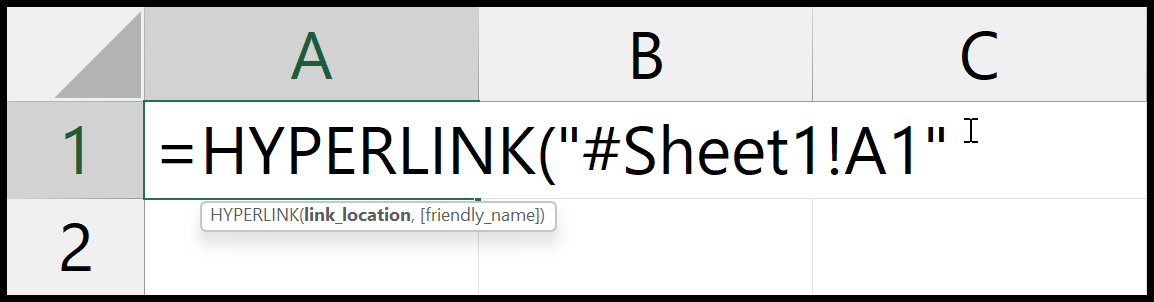
- Next, you need to enter a friendly name for the link to create in the cell.
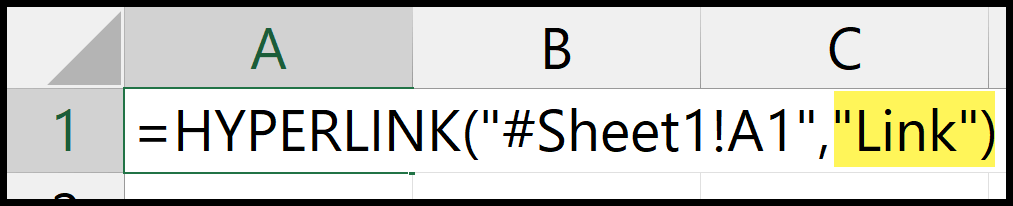
- In the end, hit enter to get the result in the cell.
So the formula ends up looking like the one below, where the “#” tells Excel the link points to a place inside the same workbook:
=HYPERLINK("#Sheet1!A1","Go to Sheet1")
And the moment you hit enter, you will get a link in the cell that moves you to Sheet1.
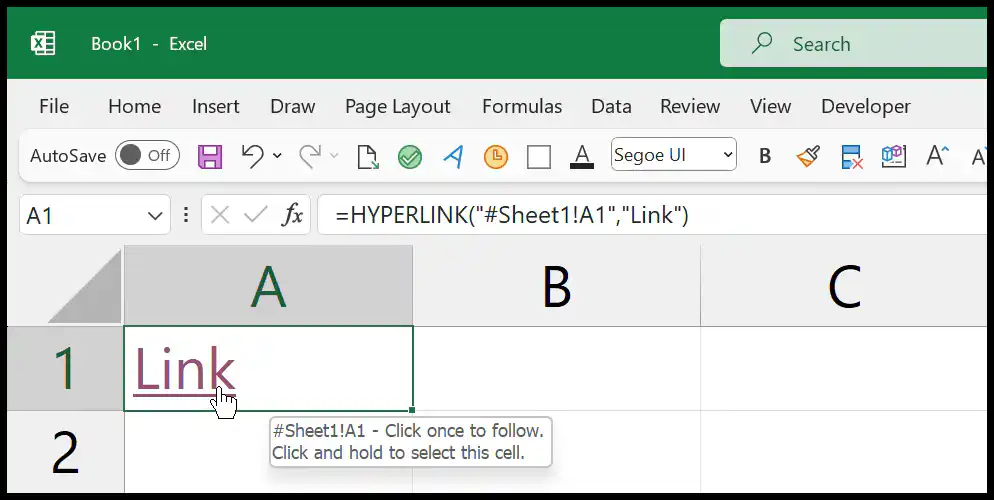
The benefit of this method is that you can change the link just by changing the address in the formula.
Create a Link to the Sheet with Drag and Drop Menu
You need to go to the sheet and the cell you want to create a hyperlink. Let’s say you want to create a link to cell A5 of Sheet2.
- Select cell A5 in Sheet2, press and hold the Alt key. After that, hover your mouse cursor on the border of the cell.
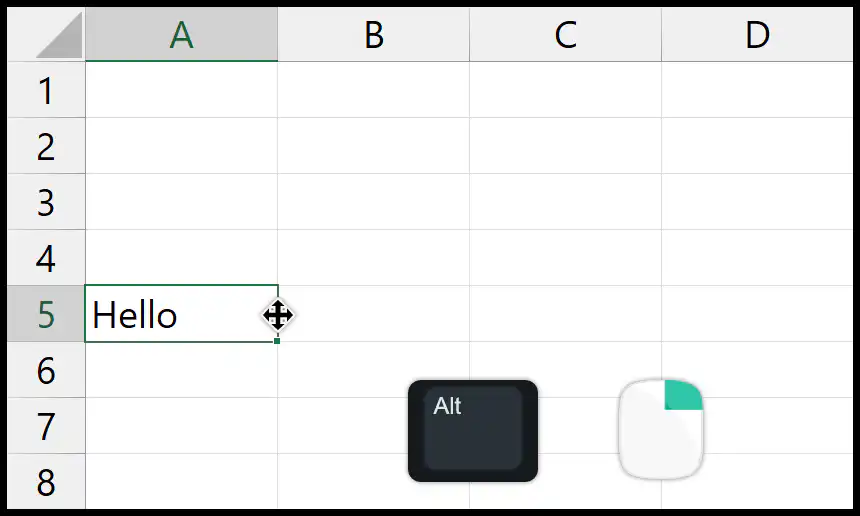
- Next, hover your cursor to Sheet1’s Tab by holding the Alt key and right click button. With this, Sheet1 will be get activated.
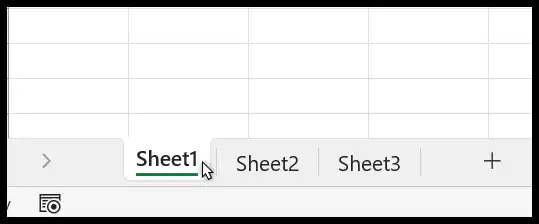
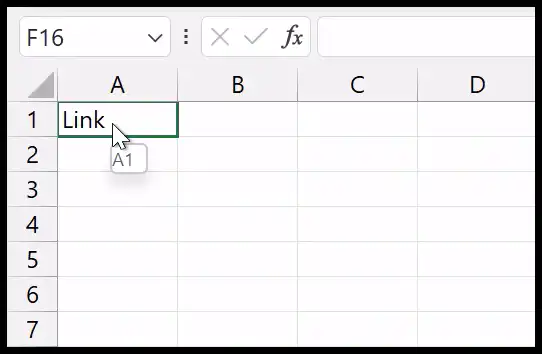
- Go to the cells where you want to create the hyperlink from here, just like we moved our cursor to cell A1 in Sheet1.
- And once you release the Alt key and Right click, it shows you a menu with options. You need to click on the “Create Hyperlink here”.
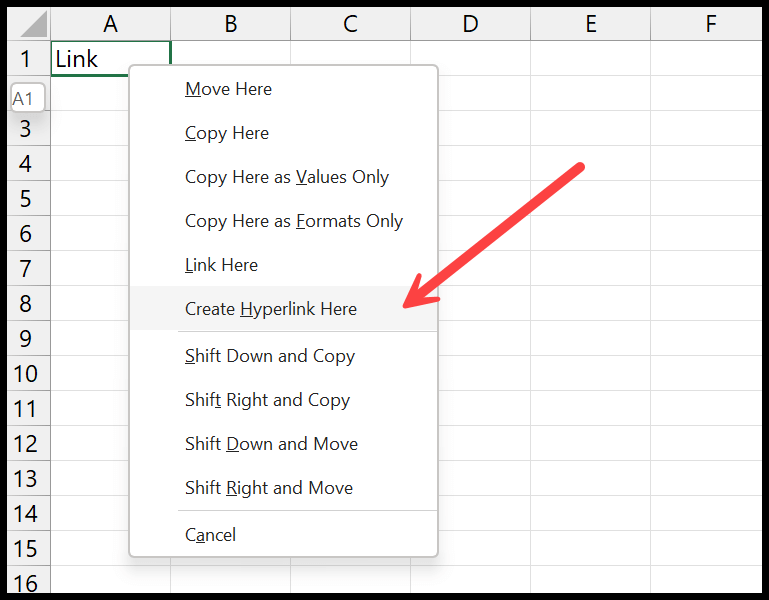
The moment you click “Create Hyperlink here”, it links cell A1 of Sheet1 to cell A5 of Sheet2.
Link to a Named Range or Another Workbook
The HYPERLINK function isn’t limited to a cell address. If you have a named range in the workbook, you can point the link straight to that name, and it works even if the range later moves:
=HYPERLINK("#SalesData","Go to Sales Data")
You can also create a link to a sheet in a different workbook. In that case, put the workbook name in square brackets before the sheet and cell, the way Microsoft documents it:
=HYPERLINK("[Budget.xlsx]Sheet1!A1","Open the Budget File")
For this to work, the other workbook needs to be in the same folder, or you can use its full file path inside the brackets.
Create a Link to a Sheet with VBA
If you need to add the same link again and again, or add links in bulk, a VBA code is the fastest way. The code below adds a hyperlink in cell A1 of the active sheet that jumps to cell A5 of Sheet2:
Sub AddSheetLink()
    ActiveSheet.Hyperlinks.Add _
        Anchor:=Range("A1"), _
        Address:="", _
        SubAddress:="Sheet2!A5", _
        TextToDisplay:="Go to Sheet2"
End Sub
Here, you keep the Address argument empty because the link stays inside the same workbook, and you put the sheet and cell in the SubAddress argument. Change “Sheet2!A5” and the display text to whatever you need.
Get the Excel File
DownloadFrequently Asked Questions
How do I remove a hyperlink from a cell?
Right-click the cell and choose “Remove Hyperlink”. To remove many at once, select the whole range first, then right-click and choose “Remove Hyperlinks”. This keeps the text in the cell and only strips the link.
Why does my HYPERLINK formula not jump to the sheet?
The most common reason is a missing “#” at the start of the link for a location in the same workbook. Also, if the sheet name has a space in it, wrap it in single quotes inside the link, like “#’Sales Data’!A1”. And remember, HYPERLINK only jumps when you click the cell; it does not move the selection on its own.
What’s the difference between the Link option and the HYPERLINK function?
The Link option (Ctrl + K) creates a fixed hyperlink that you set once. The HYPERLINK function is a formula, so you can change where it points just by editing the address, and you can even build the address from other cells. Use the function when the target might change or when you want to create links in bulk.
Written by
Puneet Gogia
Microsoft MVP — Excel · Founder, Excel Champs
Twelve years of teaching Excel, and a decade before that using it as a data analyst. Every tutorial here is written from a file I actually built.