

In Excel for Microsoft 365 on Windows, go to Data ? Get Data ? From File ? From PDF, pick the file, select a table or page in the Navigator and click Load. The data lands in a table on a new sheet. Click Transform Data instead of Load to fix the headers and column types in Power Query first.
Tick Select multiple items in the Navigator to bring in several tables at once, and use Append Queries in Power Query to join tables that run across pages. When a new version of the PDF replaces the old one under the same name, Data ? Refresh All updates the data.
Without From PDF, open the PDF in Word, which converts it to an editable document, then copy the table into Excel. The paid version of Adobe Acrobat can also export a PDF straight to .xlsx.
A scanned PDF holds pictures of the pages rather than text, so none of these methods finds a table in it. Take a screenshot of the table and use Data ? From Picture in Excel for Microsoft 365, then check every number against the original.
Whichever method you use, check the result. Numbers can arrive as text, columns can shift where the PDF has merged cells, and totals from the PDF can come in as extra rows. Compare a few totals with the source before you rely on the data.
Recently, I got an email from Paulina (from Investintech). She wanted me to try their app Able2Extract which is software made specifically to convert a PDF file into Excel.
I said, OK.
I gave it a try for a week and converted more than 10 PDF files with it in different ways. It was so easy to extract data using this simple tool that I thought it should be shared with everyone out there.
In this post, I’m going to show you how you can convert your PDF file into Excel sheets using this amazing software. The best part of this tool is that you can install it on your system, and you don’t need to upload your file to a third-party server.
But first, if you have Excel for Microsoft 365 on Windows, you might not need any extra software at all. Excel can import tables from a PDF on its own with Power Query, and I have covered that method first.
Import a PDF into Excel with Power Query
- First of all, go to Data ➜ Get Data ➜ From File ➜ From PDF.
- After that, select the PDF file and click Import.
- Next, in the Navigator window, Excel lists every table and page it found in the PDF. Click one to see a preview.
- In the end, select the table you want and click Load, or click Transform Data to clean it up in the Power Query Editor first.
The PDF option is only in Excel for Microsoft 365 on Windows. You won’t find it in Excel 2019, Excel 2016 or Excel for Mac. It works best with PDFs that were created from a program (not scanned pages), and as it’s a query, you can refresh it when you get a new version of the same PDF.
For a scanned PDF, or when Excel doesn’t find the table you want, a converter like Able2Extract is the better choice.
Extract Data from a PDF file into an Excel file
The steps to extract data from a PDF file using Able2Extract are pretty simple and are as follows.
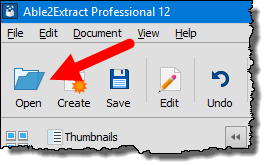
- First of all, open the application and click on “Open”.
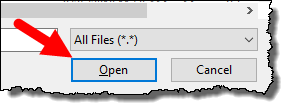
- From the “Open” dialog box, select the file which you want to convert and click “Open”.
- At this point, you have your PDF file opened in the application.
- The next thing you need to do is select the data you want to extract into an Excel file.
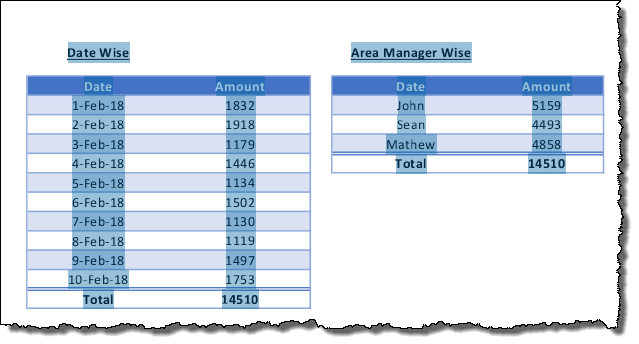
- Once you select it, you’ll get all the converting options highlighted.
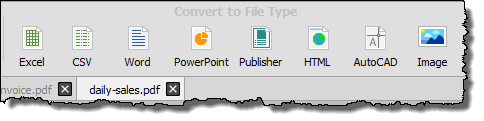
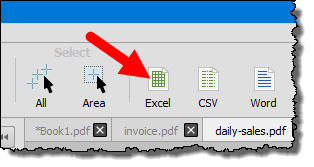
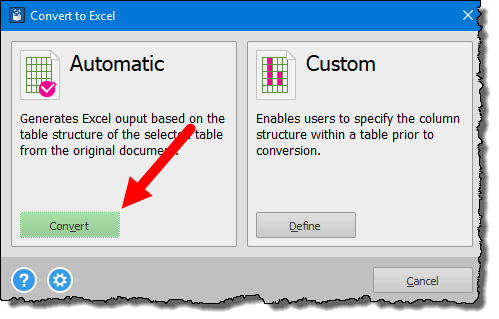
- Now, click on the Excel button and you’ll get a “Convert to Excel” dialog box, where you have two options:
- Automatic
- Custom
- For now, click on “Automatic” (I’ll describe how to use Custom in the next part of this post).
- The next thing is to specify the location where you want to save the newly generated Excel file.
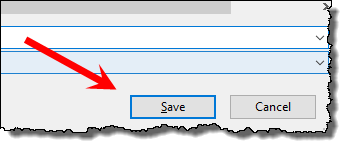
- In the end, click “Save”.
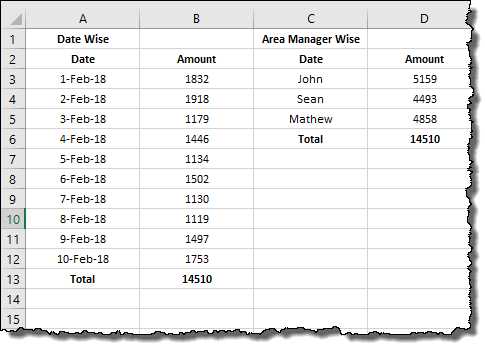
Boom! Your data is successfully converted from PDF to an Excel file. Here’s how it looks now:
There is an awesome deal going on: if you buy the full version of Able2Extract today, you can get a 10% discount. Use this Direct Link for the discount.
Using Custom Option to Get Data from a PDF to an Excel File
As I said, you can also extract data using the custom option in the Able2Extract app. Let’s say you have a PDF with a table, but you just want to extract one part of that table. Well, you can do this. You can see here we have an invoice and from this invoice, we need to get product names and their price.
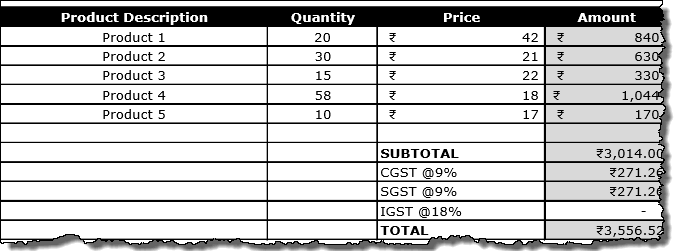
And we can do this using the custom option in Able2Extract. Here are the steps:
- First of all, locate and open the PDF file in the Able2Extract app.
- Now, select the table from which you want to extract the data.
- After that, click on the Excel icon from the ribbon.
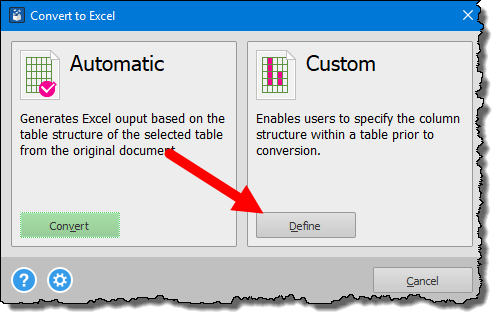
- From the “Convert to Excel” window, click on Define to open the custom editing mode.
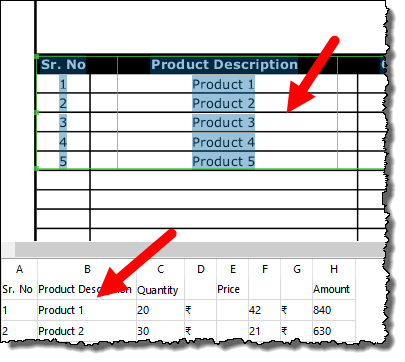
- At this point, you have an editing frame and a preview pane, and now you need to select the columns to extract.
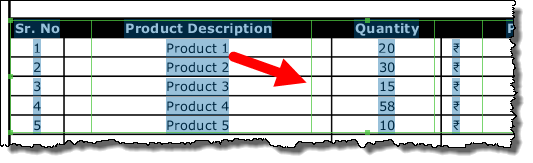
- There are two options that you can use here:
Expand and narrow down the columns to exclude/include them
Right-click on the header and skip it.
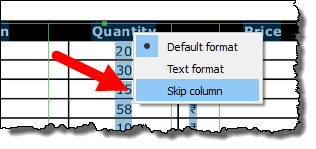
- Once you have customized the table you want to extract, you are ready to go.
- For this, click on the “Convert” button on the right side of the window.
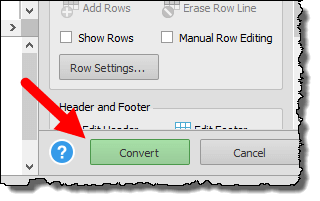
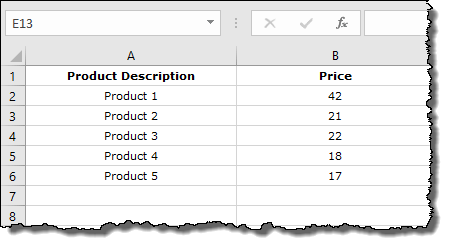
And here we have our Excel file with just the product names and their prices.
Things [Options] I Love About Able2Extract
It’s a big time saver; there is no doubt about it. But there are a few options that I love about this application.
1. Edit Data Before Conversion
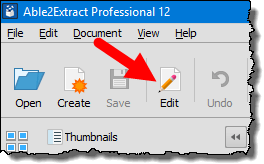
That’s my favorite option. You can edit a PDF and then convert it into the desired format. For this, you need to click on the “Edit” button and then double-click on the text that you need to edit.
2. Only Extract Tables
Not every PDF file contains only tables. Take the example of the invoice that we have just used above. If you just want to extract tables from a PDF, do it with the below option. When you open the “Convert to Excel” window, click on the gear icon from the bottom to open the settings.
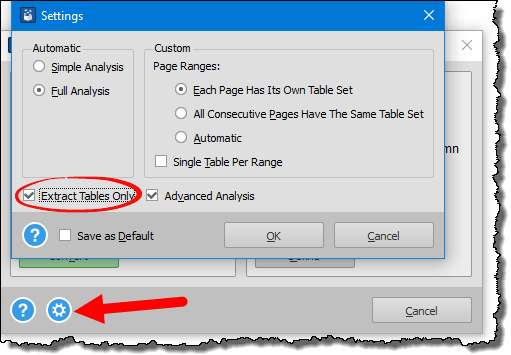
From the settings, tick “Extract Only Tables”. From then on, it will only extract tables from the PDF.
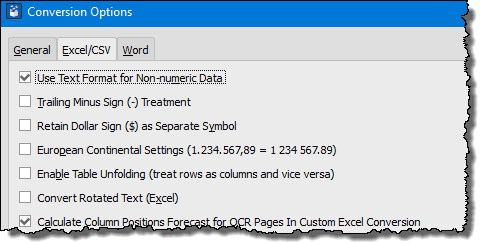
3. Text Formatting
There are a couple of options that you can use to control the formatting of the generated file.
4. Convert Multiple PDF files using “Batch Processing”
There is also an option to convert more than one file in one go, and believe me, this is a game changer.
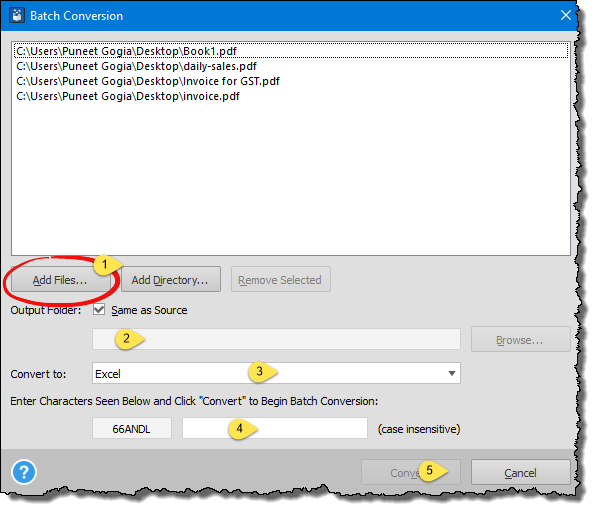
- Once you click on the “Batch” button, you’ll get a window to select multiple files or you can simply specify a folder where you have all the files.
- After that, select the location to save converted files and the output format.
- In the end, enter the characters to verify the process and click Convert.
Boom!
Conclusion
One of the most amazing things which makes Able2Extract so good is that you have the option to convert a PDF file into different formats.

Yes, we are all power Excel users, but we do need to use other formats sometimes. And I want you to give it a try and convert a couple of PDF files with it.
Note: If you want to try it before you buy it, you can download its 7-day free trial version and I’m sure you’re going to love it.
Make sure to share your views with me in the comment section; I’d love to hear from you. And please don’t forget to share this post with your friends. I am sure they will appreciate it.
Disclosure: In this post, the links to Able2Extract are affiliate links. If you buy this app using these links, I’ll get a small commission. It will not add any extra cost for you, and you can even get a 10% discount if you buy.
Frequently Asked Questions
Why is the From PDF option missing in my Excel?
The PDF connector is only in Excel for Microsoft 365 on Windows. If you have Excel 2019, 2016 or Excel for Mac, you won’t see it, so use a converter or open the PDF in Word and copy the table from there.
Can I convert a scanned PDF into Excel?
A scanned PDF is just a picture of the page, so you need a tool with OCR (text recognition). Power Query can’t read it. Check the data carefully after the conversion, as OCR can misread numbers.
Can I convert a PDF into Excel without installing software?
Yes. Use Power Query in Excel for Microsoft 365, or open the PDF in Word (it converts it into an editable document) and copy the table into Excel. Online converters also work, but they need you to upload your file to their server.