

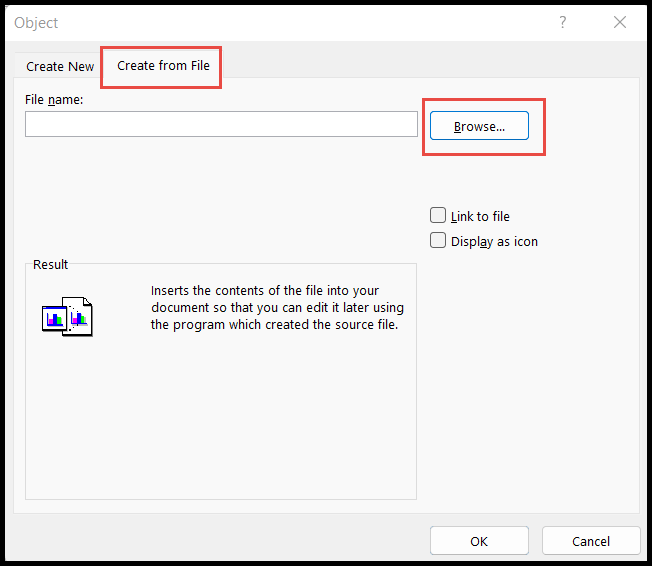
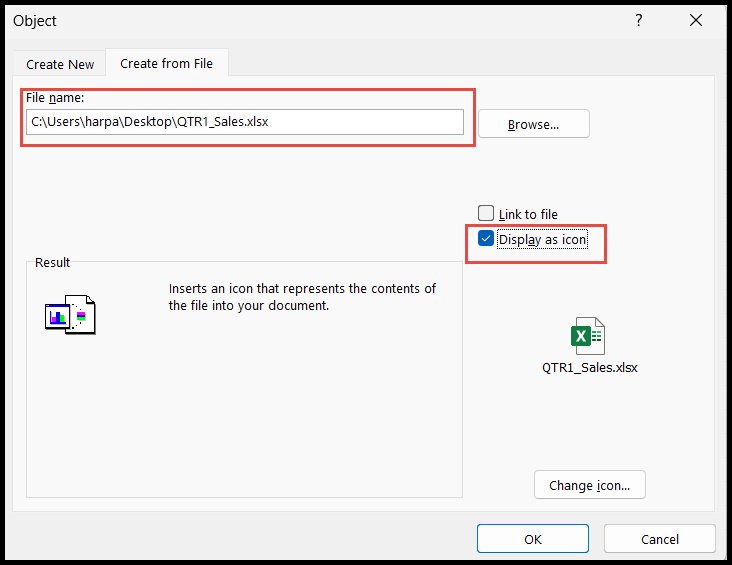
Go to Insert ? Text ? Object, open the Create from File tab, click Browse and pick the file. Tick Display as icon and click OK. The file sits on the sheet as an icon that opens with a double-click.
Use the Create New tab instead to start a new Word document, PowerPoint slide or other object inside the sheet.
An embedded file is a copy stored inside the workbook. Changes to the original do not reach it, and the workbook grows by the size of the file. Tick Link to file to point to the original instead. The sheet then opens the latest version, but the link breaks if the file is moved or the workbook is opened on a computer that cannot reach that path.
To edit an embedded file, double-click it. To get it back out as a separate file, open it the same way and use Save As in the program that opens it.
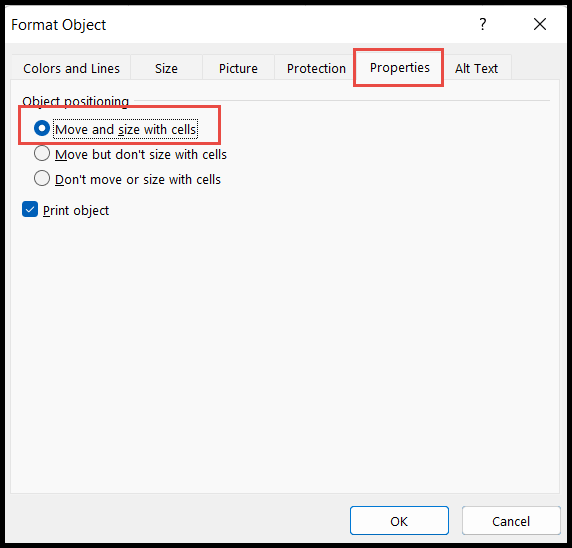
To keep the icon beside its row without stretching it, right-click it, choose Format Object ? Properties and select Move but don’t size with cells.
Embedding is a desktop Excel feature. Excel for the web cannot insert objects, and a file embedded on Windows may not open on a Mac. Some organisations also block embedded files for security, so check before sending a workbook that depends on one.
In general terms, embedding means inserting any object within the current document. Excel has a built-in feature to embed files within the spreadsheet, like an attachment.
With this feature, you can embed new and external documents like .xlsx, .docx, .pptx, .pdf, etc. and refer to them from the current spreadsheet without affecting the data set.
In this tutorial, we will show you how to embed files into the spreadsheet.
Steps to Embed a New File in Excel
Sometimes users need to embed a new blank file instead of any existing file within the spreadsheet. For that, follow the below steps:
- First, go to the “Insert” tab and click on the “Text” icon and then click on the “Object” option.

- After that, in the “Object” dialog box, click on the “Create New” tab, and then from the “Object Type” field, select the document type that you want to embed.
- Once selected, tick the “Display as icon” option if you want to show the file as an icon instead of its content, and then click OK.
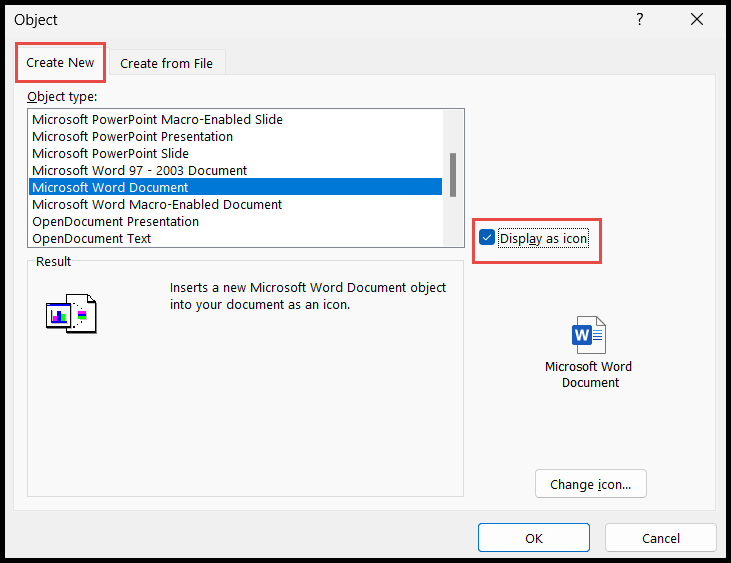
Note: You can only create new files of the types listed in the Object type list, which depends on the programs installed on your computer.
Embed External Files in Excel
- First, go to the “Insert” tab and click on the “Text” icon and then click on the “Object” option.
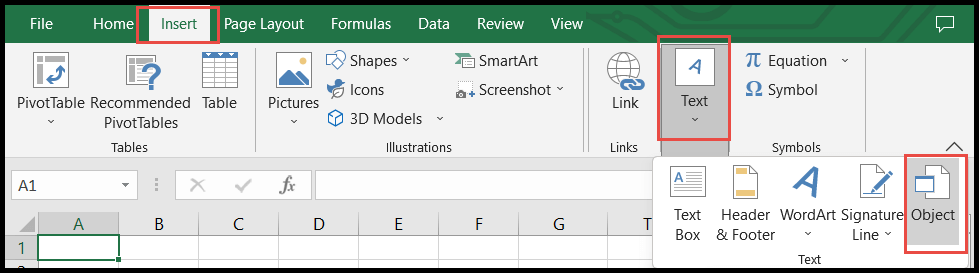
- After that, in the “Object” dialog box, click on the “Create from File” tab and then on the “Browse” button to choose the file from your local system.
- After selecting the file, tick the “Display as icon” option so that the file shows as an icon (without it, Excel shows the file’s first page or content), and click OK.
- Once the selected file gets embedded into the spreadsheet, you can resize it by hovering the mouse cursor over any of the round handles on its border and then dragging to shrink it to fit into a cell.
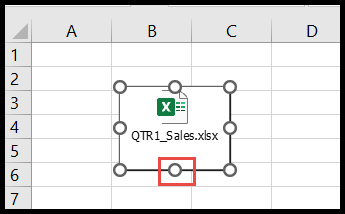
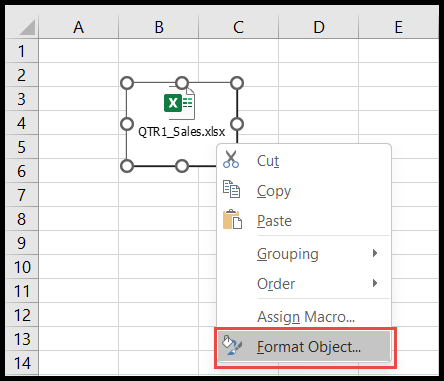
- Now, to keep the icon of the embedded file with its cell, right-click on it and click on the “Format Object” option.
- In the end, in the “Format Object” dialog box, go to the “Properties” tab and then select the “Move and size with cells” option so that the icon moves and resizes with the cell when you sort, filter, or resize rows and columns, and click OK.
Points to Remember
- When you embed the file without ticking the “Link to file” option (with or without “Display as icon”), a copy of the file becomes part of the current workbook, separate from the source file. This means if you update anything within the source file, that update will not show up in the embedded file. To change or update anything within the embedded file, always open the embedded file from the spreadsheet where it got embedded by double-clicking on it.
- If you tick the “Link to file” option, the file is only linked, not copied into the workbook. In this case, when you update the original file, the object shows the update (after Excel updates the link), and double-clicking the object opens the original file.
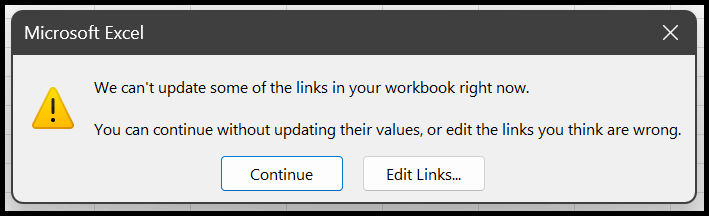
- If you have inserted the file with the “Link to file” option, other people can only open it if they can reach the same file path (for example, on a shared drive). Otherwise, they get the below error when they try to open the linked file.
- File size: an embedded file is stored inside the workbook, so the workbook gets bigger by about the size of that file. Use “Link to file” for large files.
- Excel for the web: you can’t insert or open embedded objects in Excel for the web; use the desktop app.
Frequently Asked Questions
How do I open an embedded file?
Double-click the icon or the object. Excel opens it in the program it was made in, like Word for a .docx file. You need that program on your computer.
How do I change the icon or label of an embedded file?
While inserting the file, click “Change Icon” in the Object dialog box (it shows once you tick “Display as icon”), and type a new caption or pick another icon.
How do I delete an embedded file?
Click the object once to select it and press Delete. The embedded copy is removed from the workbook; the original file on your computer stays as it is.